 Las Vegas Laundry
Clothes coming out soaked after the final spin?
Why Your Speed Queen Washer Won't Spin
The usual reasons a Speed Queen washer stops spinning, the checks you can safely do yourself, and the signs that it's time for a technician.
- 5.0 ★ on Google · 8 reviews
- 90-day repair warranty
- Fully insured (general liability & workers' comp)
- $75 Diagnostic — Waived With Repair
- All major brands — including Sub-Zero, Wolf, Miele & Speed Queen
First, figure out what kind of no-spin you have
Speed Queen machines are known for running a long time, so a washer that suddenly won't spin catches people off guard. Most no-spin problems come down to a short list of causes, and you can rule out a few yourself in minutes.
This guide covers home top-loaders, front-loaders and the coin and card models you see in laundromats and apartment laundry rooms. If you run commercial machines and need one back in service, our commercial washer and dryer repair page explains how we handle those calls.
Before you troubleshoot, note exactly what the machine does:
- Water left in the tub at the end of the cycle usually means a drain problem, not a spin problem.
- Tub drained but clothes are soaking wet points toward a lid or door lock, the drive system or the controls.
- Humming, clicking or a burning smell during spin suggests the motor is trying to turn something that won't move.
- The washer pauses, tries to spin, then gives up is often an off-balance load.
- A code or flashing light on the display gives the control's own read on the problem.
Ready to get it fixed? Most visits are booked within 1–2 business days.
Common reasons a Speed Queen won't spin
The load is off balance
This is the most common call we get that turns out not to need a part. A single bath mat, a heavy blanket or a few towels bunched to one side can throw the tub off balance. The washer senses it and may skip or shorten the high-speed spin to protect itself. Spread the load evenly and run a drain-and-spin cycle before assuming something is broken.
The lid lock or door lock isn't confirming
Newer Speed Queen top-loaders lock the lid before high-speed spin, and every front-loader locks the door. If the lock can't engage, or the control never gets a signal that it did, the machine won't spin. Causes include a worn lock assembly, a broken lid strike, a bent hinge that keeps the lid from closing squarely, or a loose wire at the lock. Never tape or jumper a lock switch to get past it. Those switches are there so nobody reaches into a spinning tub.
Water isn't draining
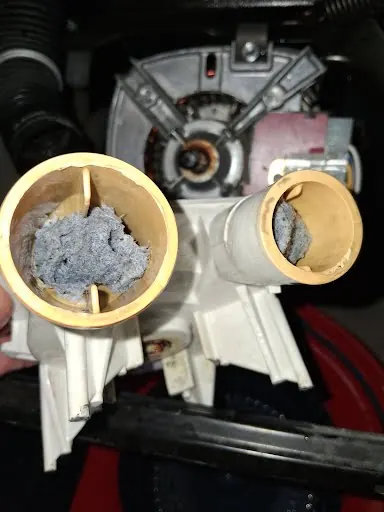
A washer won't move to high-speed spin with a tub full of water. On home machines and many top-load coin units, the drain pump can jam with socks, coins, hair ties or bra wires. A kinked or clogged drain hose, or a standpipe that's backed up, causes the same symptom. Many commercial front-loaders drain through a drain valve instead of a pump, and those valves can stick partly open or closed when lint and debris build up.
Belt or drive problems on top-loaders
Many Speed Queen top-loaders use a belt between the motor and the transmission. A belt that's stretched, glazed or off its pulley lets the motor run while the tub barely moves. You might smell hot rubber. Inside the drive system, a worn clutch, brake or transmission can also keep the basket from coming up to speed. These parts sit under the machine, and diagnosing them means tipping or opening the cabinet.
Motor, motor control or control board
If the washer drains, the lock engages and the drive parts check out, attention shifts to the electrical side. The motor itself can fail, but just as often the problem is the motor control, a failed board, or a damaged wire harness. These failures are often intermittent at first. Testing them properly takes a meter and the wiring diagram for that specific model.
Error codes
Speed Queen uses different codes across its home and commercial lines, and the meaning of a code depends on the model and control version. Write down exactly what the display shows, then check the owner's manual or the technical sheet usually tucked inside the machine's control panel. A code tells you which circuit the control is unhappy with. It does not always tell you which part failed.
What you can check yourself
These checks are safe for most owners. Stop if anything feels beyond your comfort level.
- Rebalance and retry. Remove part of the load, spread the rest evenly and run a drain-and-spin cycle by itself.
- Look at the lid or door. Make sure it closes fully and nothing is caught in it. Listen for the lock clicking at the start of spin.
- Check the drain hose. Pull the washer out carefully and look for kinks or a hose pushed too far down the standpipe.
- Clear the pump filter if your model has one. Some front-loaders have an access door at the bottom front. Put down towels and a shallow pan first, because the water inside may still be hot.
- Power cycle the machine. Unplug it for a few minutes, plug it back in and try a single spin cycle.
Unplug the washer before you open any panel or reach into the drain path. Don't bypass the lid or door lock, and don't run the machine with panels removed. On coin and card machines, leave the internal wiring and payment hardware to whoever services them.
Ready to get it fixed? Most visits are booked within 1–2 business days.
Home machines versus commercial coin and card models
Home and commercial Speed Queen washers share a lot of design ideas, but they get used very differently. A home washer might run a handful of loads a week. A machine in a laundromat or apartment laundry room can run all day.
That heavy use shows up in the parts that fail. On commercial machines we see more worn door locks, more debris in drain valves, more belt wear and more control faults caused by heat and vibration. Payment hardware adds another layer: a jammed coin drop or a card reader that's offline can keep a machine from starting a cycle at all.
If you manage several machines, a regular inspection catches stretched belts and sticky drain valves before they take a machine out of service. Our laundry equipment maintenance plans cover that on a monthly or quarterly schedule.
Hard water and lint in the Las Vegas Valley
Las Vegas has very hard water, and it affects washers more than most people expect, whether the machine is in a Henderson garage or a laundry room in North Las Vegas. Scale builds up on inlet valves, inside pump housings and around drain valves. Combined with lint and detergent residue, it can slow draining enough that the control never sees an empty tub and won't advance to spin.
If your washer has gradually started draining slower over months, buildup is a likely contributor. Running a periodic cleaning cycle helps on home machines. On commercial machines, the drain path should be part of routine maintenance.
Ready to get it fixed? Most visits are booked within 1–2 business days.
When it's time to call a technician
Call for service if the washer still won't spin after you've rebalanced the load and confirmed it drains, if you hear grinding, smell burning, or see the motor humming without the tub turning. Repeated lock clicking, intermittent spin and recurring error codes also deserve a proper diagnosis before a small problem turns into a bigger one.
On the visit, we diagnose the cause, explain what failed in plain terms and give you a quote before any work starts. If a part has to be ordered, we tell you the timeline before you approve. The $75 diagnostic fee is waived when you approve the repair, and repairs carry a 90-day warranty on parts and labor. Most visits are booked within 1–2 business days.
For laundromats, apartment laundry rooms and other properties, see commercial washer and dryer repair. For a Speed Queen in your home, our washer repair page covers how we handle residential calls. Either way, you can call (702) 763-5110 or use the form on this page.
5.0 ★ on Google
8 Google reviews, all five stars. Here's what customers say.
“Kevin and his team bailed me out of a jam and got my machine back up and running in no time at all. Now my machine is running great and my clothes are clean. Thanks for the quick service.”
Frequently asked questions
Why does my Speed Queen washer drain but not spin?
When the tub empties but clothes stay soaked, the usual causes are an off-balance load, a lid or door lock that isn't confirming, a worn belt or drive part on top-loaders, or a motor control or board fault. Start by rebalancing the load and running a spin-only cycle. If that doesn't work, it's worth having the lock and drive system tested.
Can I reset a Speed Queen washer that won't spin?
Unplugging the washer for a few minutes and plugging it back in clears some temporary control faults. It won't fix a jammed pump, a failed lock or a worn belt. If the problem comes back after a power cycle, there's a physical or electrical cause that needs diagnosis.
Do you repair commercial Speed Queen coin and card washers?
Yes. We repair Speed Queen commercial washers and dryers for laundromats, apartment laundry rooms and other properties, including problems with coin drops and card readers. See our commercial washer and dryer repair page for details.
How much does it cost to fix a Speed Queen washer that won't spin?
It depends on the cause, the part and how much of the machine has to come apart. We charge a $75 diagnostic, and the $75 diagnostic fee is waived when you approve the repair. You get a quote before any work begins, and repairs carry a 90-day warranty on parts and labor.
Prefer to request service online?
Calling is the fastest way to get on the schedule, but you can also send us the details here and we'll call you back. Most visits are booked within 1–2 business days.
The $75 diagnostic fee is waived when you approve the repair.
It's after hours right now. Send the form and we'll call you back next business day.
Call or Schedule Online
Mon–Fri 8:00 AM – 6:00 PM · Sat–Sun 10:00 AM – 4:00 PM. Most visits are booked within 1–2 business days.