 Las Vegas Laundry
Tired of out-of-order signs on your machines?
The Annual Laundromat Maintenance Checklist
A daily-to-annual maintenance checklist for laundromat washers, dryers and payment systems, written around the hard water, heat and lint that wear down equipment here.
- 5.0 ★ on Google · 8 reviews
- 90-day repair warranty
- Fully insured (general liability & workers' comp)
- $75 Diagnostic — Waived With Repair
- All major brands — including Sub-Zero, Wolf, Miele & Speed Queen
Why a written checklist beats fixing things as they break
Most laundromat breakdowns don't come out of nowhere. A door boot tears a little more each week, a belt glazes over a few months, and a lint chamber fills a bit with every load until a dryer stops heating. A written checklist turns those slow failures into small, scheduled jobs.
The lists below are organized by how often each task should happen. Use them as a starting point and adjust for your machine count and hours. If you'd rather hand off the technical items, our laundry equipment maintenance plans cover them on a monthly or quarterly schedule.
One safety note applies to everything here. Before anyone opens a panel, reaches into a lint chamber or touches wiring, disconnect power to that machine, and shut off the gas supply to a gas dryer. Attendants should handle the daily and weekly items; burners, gas valves, electrical work and internal repairs belong with a qualified technician.
Ready to get it fixed? Most visits are booked within 1–2 business days.
Daily checklist
These take a few minutes per shift and prevent a surprising share of service calls.
- Clean every dryer lint screen, more than once a day on busy days. A clogged screen makes dryers run long and hot.
- Walk the floor and run a quick look at each washer door boot or gasket for trapped socks, coins and torn rubber.
- Wipe detergent and softener spills from dispensers, door glass and machine tops.
- Check for water on the floor around washers. A small puddle often points to a door boot, hose or drain issue in its early stages.
- Listen for unusual noise during spin and tumble: grinding, squealing or loud thumping.
- Test any machine a customer reports as not starting, not taking coins or not reading a card, and tag it out of order right away if it fails.
- Make sure out-of-order signs are removed once a machine is back in service.
Weekly checklist
- Clean dryer lint compartments below or behind the screens. Lint that gets past the screen collects here.
- Wipe front-loader door boots inside the folds, where residue and mildew build up.
- Run a test vend on every coin drop and card reader. Confirm each one gives correct credit and starts the machine.
- Empty coin vaults on a schedule before they're full. A packed vault can back coins up into the chute and jam the drop.
- Check that the exterior dryer exhaust hoods open freely and aren't blocked by lint, nests or debris.
- Look over detergent dispenser cups and flush any that are caked or slow to empty.
- Review your out-of-order log so the same machine failing twice in a week gets attention.
Ready to get it fixed? Most visits are booked within 1–2 business days.
Monthly checklist
- Inspect washer door locks and latches. A lock that is slow to engage or release is worth replacing before it strands a load.
- Check washer drain valves or drain pumps for lint, coins and debris. Slow draining often starts here.
- Inspect dryer drive belts and idlers for cracks, fraying and glazing.
- Look at dryer door seals and door switches. A worn seal pulls in room air and lengthens dry times.
- Clean coin paths and coin slides with a dry method. Avoid spraying oil into coin mechanisms, since it collects dust and lint.
- Check card readers for loose mounting, damaged faceplates and any that drop offline.
- Confirm pricing and cycle settings on each machine still match your posted prices.
Quarterly checklist
- Pull inlet hoses and inspect the inlet valve screens. Hard water leaves scale that restricts fill and can make washers run long or fail fill-time checks.
- Inspect washer belts, motor mounts and suspension or shock components for wear.
- Listen for bearing noise on washers during high-speed spin. Early bearing wear is a planned repair; a seized bearing is a long downtime.
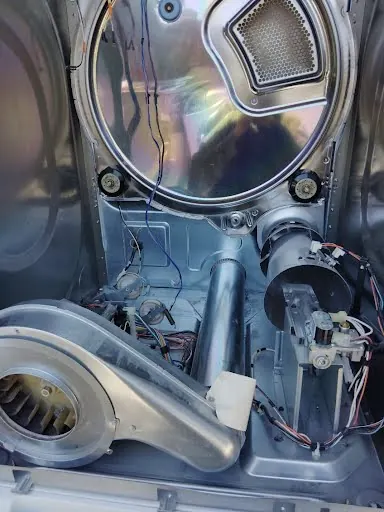
- Clear lint from inside dryer cabinets: around the blower, motor and burner area. The photo above shows how much can collect around a blower and motor.
- Have dryer burners and igniters checked by a technician. Slow ignition, repeated ignition attempts or a dryer that heats only part of the time are early warning signs.
- Check dryer drum rollers, glides and bearings for noise and wobble.
- Inspect power cords, plugs and visible wiring for heat discoloration or damage.
Ready to get it fixed? Most visits are booked within 1–2 business days.
Annual checklist
- Clean the full dryer exhaust run, from each dryer to the outside termination, at least once a year and more often for heavy use. Lint buildup in exhaust ducts is a fire risk and makes every dryer on that run work harder.
- Have gas connections and gas valves on dryers inspected, along with any water heater serving the store, by qualified professionals.
- Replace door boots, door gaskets and drain valve parts that are worn but haven't failed yet.
- Review each machine's repair history. A unit that keeps coming back may be costing more than it earns.
- Update posted signage: instructions, pricing, machine numbers and a contact number for customers to report problems.
- Check that each machine is level. An unlevel washer walks, vibrates and wears its suspension early.
- Walk through your payment system as a whole, including card reader software settings, communication with the machines and how refunds are handled.
What heat, hard water and lint do to laundromat equipment
Las Vegas is hard on laundry equipment in a few specific ways. The water is very hard, so scale builds on inlet valve screens, drain components and anything that holds standing water. Summer heat raises the temperature inside the store and inside dryer cabinets, which is tough on motors, control boards and belts. Dry, dusty air adds to the lint that collects in dryer cabinets and exhaust ducts.
None of that means your machines are doomed, whether your store is in Las Vegas proper, Henderson or North Las Vegas. It means the inlet screens, lint areas and exhaust runs on the checklist above deserve more attention here than a generic manufacturer schedule might suggest.
Ready to get it fixed? Most visits are booked within 1–2 business days.
Getting help with the technical items
Owners and attendants can handle the daily and weekly items. The monthly, quarterly and annual work involves panels, gas and electrical parts, and that's where a technician earns their keep. Our laundry equipment maintenance plans include scheduled visits on a monthly or quarterly basis, with a written note of what we found on each machine. Pricing is quoted per site based on machine count and frequency.
When a machine is already down, see laundromat equipment repair, or our coin and card reader repair page for payment problems. The $75 diagnostic fee is waived when you approve the repair, and repairs carry a 90-day warranty on parts and labor. Most visits are booked within 1–2 business days.
5.0 ★ on Google
8 Google reviews, all five stars. Here's what customers say.
“Several washers and dryers at my laundromat were having issues I couldn't figure out, so I sent in an inquiry describing what we were running into. Kevin responded quickly and scheduled an appointment ASAP to come out and troubleshoot. Once he found the problem, he quoted me a very fair price. He completed the work, and the machines have been running perfectly ever since. I've since hired them to handle regular maintenance on all of my machines and card readers. They were efficient and super kind. Highly recommend!”
Frequently asked questions
How often should laundromat dryer vents be cleaned?
Lint screens should be cleaned daily and lint compartments weekly. The full exhaust run should be cleaned at least once a year, and more often for stores with heavy dryer use.
Should a laundromat do maintenance monthly or quarterly?
Busy stores running machines most of the day usually do best with monthly visits, while lighter-use sites can often go quarterly. Daily and weekly tasks like lint screens and test vends should happen regardless. Our maintenance plans come in both options.
Why does hard water matter for commercial washers?
Hard water leaves mineral scale on inlet valve screens, drain parts and other components that hold water. Over time that restricts fill and drain, which can cause long cycles and errors. Checking inlet screens and drain paths regularly keeps it under control.
Do you service coin drops and card readers during maintenance visits?
Yes. We check coin drops, coin slides and card readers as part of maintenance, and we repair Greenwald, ESD, Coin-O-Matic and other payment equipment when it's not working.
Prefer to request service online?
Calling is the fastest way to get on the schedule, but you can also send us the details here and we'll call you back. Most visits are booked within 1–2 business days.
The $75 diagnostic fee is waived when you approve the repair.
It's after hours right now. Send the form and we'll call you back next business day.
Call or Schedule Online
Mon–Fri 8:00 AM – 6:00 PM · Sat–Sun 10:00 AM – 4:00 PM. Most visits are booked within 1–2 business days.